At the Stegastein viewpoint, Aurlandsfjord, Norway
In 2025, we explored the culture and history of Stockholm, the stunning beauty of Norway,
and visited in New York and Delaware. It's also been a year of great uncertainty,
and at times we've just felt like screaming. Now more than ever we are grateful to be
anchored by the love of our family and friends. Sending love and best wishes for the new year.
Happy Holidays!
Love, Tom and George
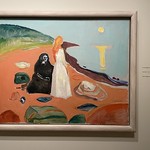
Edvard Munch's The Scream, MUNCH Museum, Oslo, Norway
2
0
2
5
H
I
G
H
L
I
G
H
T
S
A Grand Gala in Stockholm and Exploring Norway
When our friends Fred and Jay told us last year that they were planning a grand milestone birthday party
for Jay to be held at the Royal Swedish Opera house, we knew that was not to be missed.
And so we made our way to Stockholm in late April for what turned out to be a truly
memorable celebration. Since many friends had traveled from the US and from other
countries all over the world, they thoughtfully planned a few events before the big Sunday night gala,
including a Friday night cocktail reception, a Saturday brunch, and a visit to
Millesgården,
a lovely sculpture garden. By Sunday, we'd already got to know some of
their Swedish friends. The big night was amazing, set in the gorgeous neo-Classical opera house,
starting with a champagne reception in the lobby, and then going up the grand staircase to an elegant four-course
sit-down dinner in the magnificent golden foyer. The leisurely dinner included an interval
to enjoy the grand balcony before sunset. The entertainment included a soprano singing opera
arias, and a famous Swedish pop singer. Truly unforgettable!
During our days in Stockholm, we enjoyed discovering the charming cosmopolitan city with a
rich history. We toured the
Royal Palace
and got to see the changing of the guard ceremony
(including an equestrian drum and bugle corps) and the royal treasury. We wandered
Gamla Stan,
the island with the oldest part of the city, and we shopped the grand stores on Hamngatan.
We marveled at the
Vasa,
a well-preserved wooden ship of war meant to be the flagship of
King Gustav Adolphus' fleet, which sank on its maiden voyage in 1628 and was only recovered
in 1961.
From Stockholm, we flew the short hop to Oslo, the cosmopolitan capital of Norway.
Oslo is a fascinating city, and you can read some of its history in its architecture,
with plenty of Art Nouveau and Art Deco from earlier periods of prosperity, complimented
by a breakout of very modern architecture reflecting its new oil wealth from the 1980s.
The very modern
opera house, looking like a marble-and-glass glacier sliding into the fjord,
and the nearby MUNCH Museum (housing a large collection of
Edvard Munch, including the famous Scream) sit not far from the 13th century
Akershus castle and fortress, and the Functionalist-style
Rådhus
(city hall) with Art Deco details. Interesting museums include a fascinating one
dedicated to the
Norwegian Resistance
during World War II, and one all about the
Nobel Peace Prize
and its winners
(Oslo is the home of the Nobel committee, and where the prize is presented).
We also enjoyed the expansive and exuberant
Vigeland sculpture park
(not to be missed!) and a Michelin-star dinner in a 17th-Century wealthy merchant's house
Statholdergården
Another short flight took us to the west coast of Norway, and the charming town of
Ålesund,
a showcase of Jugendstil architecture (the Norwegian branch
of Art Nouveau). From there we picked up an electric car (Norway is the most EV-forward country
in the world) and drove into fjord country, along small but well-maintained roads through
stunningly beautiful scenery,
and often mediated by
ferry rides
across or through the fjords. Some of the mountain pass roads are a joy and a thrill to drive.
The (in)famous Trollstigen was closed for repairs, but the
Gaularfjellet
road was every bit as amazing. We visited tiny but charming towns like
Geiranger,
Balestrand
with its fairy-tale church and grand hotel, and
Undredal,
home to more goats than people.
Along the way, we saw a couple of the few remaining
stave churches
(wooden construction as old as 1200 A.D.),
rode the
Flåmsbana
(the steepest standard gauge railway in Europe, climbing 2800 feet in 12.5 miles),
sampled lots of cider from the many apple orchards we passed, and saw many
thunderous waterfalls.
We ended our trip with a few days in Bergen, a charming historic seaport and Norway's
second-largest city. We took the funicular up to the top of
Mount Fløyen
for a great view of the whole city and to meet the resident goats.
We met for dinner with Tom's old colleague Peter from Vertel days (1990s).
We drove out to see
Troldhaugen
(the home-turned-museum where composer Edvard Grieg lived),
Gaumlehaugen (the western royal residence), and Damsgård
(the country manor house where our friend Leif's grandmother lived).
We wandered the lovely
city center with its museums, park, and public spaces.
We learned about the history of the Hanseatic merchants that thrived here
as we walked through the Bryggen (UNESCO World Heritage site of merchant homes and shops).
We enjoyed the interesting
fortress
and beautiful churches.
In March, Tom was asked by his employer to take a 2-week business trip to do some software installation
and testing at a military base in the middle of the Australian outback. It was mostly long work hours
with Tom staying in quarters on the base, so not any good opportunity to bring George along. He did get a
weekend in the middle to go see Uluru (famous rock formation in the middle of nowhere), and to cuddle
some baby roos at a kangaroo sanctuary. Overnight stopovers in Sydney each way allowed him to meet
up with our friend Emma whom we hadn't seen in 20 years or so. It was the longest Tom and George
had been apart, but we figured out how to bridge the 17-and-a-half hour time difference:
if Tom phoned home just before lunch, he could catch George just before dinner the night before.
Visiting in New York and Delaware
Before the pandemic, we used to get out to the east coast to see our family and friends there
almost every year, but we'd lost our groove on that. It had been four years since we were last
in New York. At the start of November, we made this overdue trip. On one day, we went out to
Long Island to spend some time with our Shaffet cousins. Betty and Mike no longer live in the city,
and are back to their Roslyn Heights home where they used to welcome Tom for Thanksgiving when
he was in college. We had a nice catch-up with Susan on the drive from the city.
On another day, we visited with Casey and Michael, who now live in DUMBO (one of those New York
acronym neighborhoods, it's the part of Brooklyn "Directly Under the Manhattan Bridge Overpass").
We haven't really explored Brooklyn, but this neighborhood is charming with a lot of redevelopment
energy and great views across the river to Manhattan and the Statue of Liberty. They have a cool
(and very spacious!) apartment in a converted brick-walled factory building, and we're excited
for the baby they're expecting in January. One evening we met up with our friend Pranav for a
fun Halloween bar crawl in Hell's Kitchen, and another evening we met up with Tom's classmate
Alan and his husband Joey for dinner and dessert.
Of course it wouldn't be a New York trip without a couple of Broadway shows. We were delighted
with Maybe Happy Ending (this year's Best Musical Tony winner), an unexpectedly charming story
set in a not-too-distant future in a retirement home for outdated personal assistant androids.
And we laughed non-stop at the hilariously irreverent Oh, Mary! featuring Jane Krakowski and
Cheyenne Jackson. We hung out at the stage door to meet some of the cast. And we bumped into
our LA friends Fred and Jay who coincidentally were at the same show.
We also had a bit of time for sightseeing.
We'd seen The Vessel — a giant bowl-shaped construct of Esher-like
stairways — as it was being constructed, and another time when it was closed, but this was
our first time to go in it. And we'd never been on Little Island, constructed a few years ago
on remnants of Pier 54, a nice park atop a couple hundred concrete "tulips" (or they look more
like the back halves of high heel shoes). In between, we enjoyed a beautiful crisp autumn
afternoon walking the High Line. George had feared we might be too late for the fall foliage,
but there was still plenty on show. We also visited some favorite spots in Central Park, and
walked down Fifth Avenue to Rockefeller Center, where the ice rink was already set up.
(Memories of Tom's Mom everywhere.)
Since we know two couples who independently retired to the small beachside town of Lewes,
and have other friends in Wilmington, we figured we needed to add Delaware to our visit.
So we picked up a rental car and headed down the foliage-lined New Jersey Turnpike.
Cheryl (who was Tom's housemate and co-founder of an Internet startup in San Francisco the same
year he started dating George) and her husband Kevin have mostly retired from the dot-com business
and have taken up renovating old houses. Their latest project is Mauchline, a grand mansion built
by a DuPont executive in 1916, turned to a convent in the 1970s, and abandoned since 2000 until
they bought it a couple years ago. The structure was sound, but there's been a ton of work to
painstakingly restore details like ornate plaster ceilings and carved wood, and re-establish
functional plumbing. They've been able to find some of the original fixtures and hardware,
and clean up the crystal chandeliers. It's a fantastic project with much accomplished and much still ahead.
We hadn't seen them in person in over 10 years, and it was great to catch up.
We backtracked a bit to Philadelphia to take our cousin Jacob out to dinner.
Jacob is in his first year of medical school at Penn.
We then headed out to Lewes, to spend a couple of days with Catherine and Rich, who have recently
landed there as the latest stop in their peripatetic retirement. Lewes, the "first town in the first state",
was settled in 1631 by the Dutch, at the point where Delaware Bay meets the Atlantic Ocean.
We enjoyed the cute little town with its historic homes and a recreated historic area (we took some
grog in the colonial tavern served by a barman in period costume), and walked on the beach at
Cape Henlopen (where a German U-boat surrendered at the end of WWII). One evening, our friends
Bruce and Susan invited us all to dinner at their home, where they've also retired to Lewes,
and we had a wonderful time visiting and catching up. Bruce, Catherine, and I all worked together
in the 1980s, and Bruce and Catherine hadn't seen each other since then.
Year Begins with Apocalyptic Fires
We can't reflect on this year and not acknowledge the horror with which it began.
We've lived in California our whole lives, and we've seen many wildfires before, but
never had we seen anything like this. On the evening of January 7, driven by extraordinary winds,
fires were starting literally all over the city. Several were getting out of control and
new ones kept popping up.
Though they never got within a few miles of us, on the evening
of January 8, we could see flames burning in the Hollywood Hills, and from our backyard
we could see the glow from the Eaton fire. We watched in horror as new fires kept getting
reported — Altadena, Palisades, Hollywood, West Hills, Granada Hills(!), Malibu.
We watched and waited for days before the firefighters could get it all under control.
And then over the next few weeks, we learned the extent of the destruction (30 dead and over
16,000 structures destroyed), and just how many people we knew personally had been affected.
We learned of a half-dozen families whose homes had burned completely to the ground, and several
more whose homes survived but had to move out for months while the smoke-damaged contents
were removed by hazmat crews and repaired and replaced. We took friends shopping who were overwhelmed
at where to begin when you literally have nothing but the clothes on your back, and we offered
meals for friends who were in the shock of displacement. Our hearts go out to all who suffered loss,
and we hope our city never sees the likes of that apocalypse again.
Everyday Life
In between travels, our everyday life continues much the same. We still enjoy living in Echo Park (24 years now).
Tom is still going into the office 4 days a week (he has Fridays off).
He expects to retire in a couple years or so (the exact date has got a bit soft
as we wait to see how the economy fares), but he's still enjoying his work and his colleagues
so doesn't mind continuing. George is enjoying retirement, taking long walks on the trails in Elysian Park
each morning, meeting neighbors, and keeping up the house and yard. Though we mix it up sometimes,
we like having a steady rhythm to our weeks, with Friday neighborhood date nights, Saturday morning
church, Saturday night movie and dinner (in that order), Sunday farmer's market shopping, and
Sunday night family dinner. We continue to be grateful for all the friends and family in our life,
for our good health, and for all the rich cultural and natural offerings of the city we call home.
Our 2025 At A Glance
We hosted a New Year's Day brunch with Bill & Leo and Peter & Scott.
JAN
Rich & Catherine visited us at the start of the year. We took them to see the Rose Parade floats.
We remember Tom's "Auntie" Beryl, a family friend and music teacher from childhood, who passed away.
Horrific brush fires destroyed hundreds of homes in Altadena and Pacific Palisades. While we weren't directly affected, we could see flames of two fires from our house, and we know many families who lost their homes.
We were saddened at the passing of George's cousin James, a beloved husband, father, grandfather, brother, and cousin to many.
Our church was filled for the memorial for Harold Fanselau, a good man who had been a pillar of the church and a friend to many. George's grandfather had sponsored Harold's family when they first immigrated from Argentina.
We celebrated George's birthday, just the two of us with dinner at Union on the day, and then at 71Above with friends on the weekend.
FEB
At City Church, we celebrated Pastor Leif's retirement after over 20 years of service, with a potluck and of course ice cream.
In early Feb, we made our annual trip down to Borrego Springs with Dad and Andy (and Lucky) to visit our Taylor cousins Susan, Bruce and Nancy.
Rusty the roadrunner followed us home from Borrego. The works of Ricardo Breceda are well known around the desert where many of his giant scale sculptures are on public display.
Tom's birthday celebrations included birthday dinner at Saffy's with February birthday buddies Steve and Anil, George made kloesse on his actual weeknight birthday, Mark took him out for breakfast (with the cost of eggs, what a friend!), and dinner at our fave Bistro 45 on the weekend. Tom's Dad and friend Bill both picked out the exact same birthday card on the theme of age and fine whiskey.
We picked out a design and picked out glass for the stained glass window that our friend Carol is making for our staircase landing.
At the opening night reception for Cosi Fan Tutte at the LA Opera, we got to see our rising young tenor friend Anthony Leon, and Tom got meet Rod Gilfry, of whom he's been a fan since Florencia en el Amazonas.
MAR
Most of March was taken up when for reasons known only to Tom's employer, he was sent to the absolute middle of nowhere in Australia for 2 weeks, while George endured patiently at home.
In April, we went up to Santa Barbara for the wedding of Eleanor and Lee's daughter Vivien Lee, and got to visit with Steve and Scott who hosted us up there.
APR
This spring was a good one for wildflowers in Elysian Park, where George takes his weekday walk (and Tom joins on Fridays).
At the end of April, we're off to Stockholm for Jay's epic birthday gala.
MAY
The beginning of May found us in Oslo and exploring the fjords of western Norway.
Our friend Marguerite passed in March at age 97. Her celebration of life filled the church with music and wonderful remembrances, as she would have wanted.
We celebrated Bill's birthday with brunch in Pasadena and our annual visit to the Showcase House of Design.
We enjoyed a Memorial weekend barbecue at James and Martin's house, friends we'd gotten to know better in Stockholm. Fred, Jay, and Weston were there too.
We spent Memorial Day visiting the Huntington Gardens and Library, and asking ourselves why we don't do this more often.
Jason and Brendan's wedding in Woodland Hills was not only a joyous ceremony but a great reunion of many friends we don't see often.
JUN
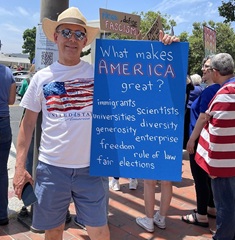
We joined millions of fellow Americans in a sea of red, white, and blue for the first national No Kings protests.
We were delighted to have our yard enjoyed by frolicking children when cousins Donna, Rachel, and her girls came out to visit and we had a family cookout. Our first time to meet our cousin Kennedy!
We co-hosted the 3rd annual LA Refugee Pride Reception to support the work of ORAM for LGBTQ refugees worldwide.
We celebrated RJ's daughter Ava as she graduated from UC Davis.
JUL
We got a preview of the new David Geffen Galleries at LACMA, a curvy amorphous space by architect Peter Zumthor that spans over Wilshire Blvd.
JUL
We celebrated 4th of July with a barbecue party at Mrs K's house with music by Virtual Campfire and friends.
Fred & Jay invited us to their box for the Hollywood Bowl's Classical Pride concert, featuring Bernstein, Tchaikowski, Jennifer Higdon, and drag violinist Thorgy Thor.
The Hyundai Ioniq 5 is officially the new popular car in LA. There are sometimes two or three in a row at Tom's office parking lot.
When DJones scored a business trip to LA, we got to meet up with him for a DTLA rooftop dinner.
Breakast at Rex's Cafe in San Pedro to celebrate Mark's birthday.
We joined our Virtual Campfire friends to see the Saw Doctors at the Belasco theater downtown.
Charles and Scott came out to visit, and we went to The Getty to see the Queer Lens exhibit.
Nelson's Hollywood Bowl picnic featured Diana Ross this year. RJ and Henry joined us for the fun.
We took a quick trip up to Sacramento for David & Emma's wedding reception, and to check out Paula's new home. Good times visiting with all the Lind clan.
When Bruce & Greg came down to visit, they treated us to dinner with Bill & Leo at Cha Cha Cha in DTLA.
AUG
We headed out to La Sierra for the annual Kinship Kampmeeting to catch up with a bunch of our SDA Kinship friends.
Our friend Carol has become a skilled stained glass crafter and offered to make us a window for our stairwell. Carol & Chris came over to install our new window (with custom frame by Chris). We're captivated with how it looks so different in every changing light.
When Nitin invited us to see the USC marching band perform at Disney Hall, how could we refuse? Also included a concert performance of the Broadway musical Six.
Late August brought another Virtual Campfire pool party barbecue and concert at Mrs K's house.
SEP
We attended a performance of our friend Esteban Ramirez with his string octet when they came to LA for the Western Arts Alliance showcase.
It's always fun to attend the LA Opera opening gala, this year with an operatic performance of West Side Story. (We didn't attend the gala dinner party, but it was fun to see everyone dressed up for it.)
OCT
Tom met up with Rich, one of his best friends from high school, whom he hadn't met in person for over 40 years.
While George was getting his last colonoscopy at USC Arcadia Hospital, Tom took a morning visit to the LA Arboretum while waiting to go back and pick him up.
In Oct, we once again joined our fellow citizens on the streets of Glendale for the No Kings protest. It was estimated that 7 million people turned out at hundreds of protests around the nation.
When Dodger Stadium is your neighbor, and the Dodgers get in the World Series, the whole neighborhood turns blue. Blue horchata and blue and white concha from our favorite taco spot.
NOV
Our first week in November was spent in New York City and Delaware, catching up with east coast friends and cousins.
Along with Nitin & Bruce, we headed out to Charles & Scott's for a Palm Springs Pride weekend, to enjoy the festival and parade.
Thanksgiving as per our recent tradition was at a Polish restaurant called Solidarity in Santa Monica, with Dad, Andy, Wendy, and Lucky. Some of us had traditional turkey dinner, while others had stuffed cabbage, stroganoff, and kielbasa.
Glendale City Church annual Christmas concert featured Vivaldi's Gloria.
DEC
We celebrated Hanukkah at Dad's house, with Wendy, Liz and Mary. I brought latkes and Wendy brought brisket.
We enjoyed a Christmas Eve Eve party at Fred and Jay's.
We flew up to Portland to spend Christmas with Allison, Nathan, Max, Lily, and Dean.
We celebrated Chatt family Christmas on the 28th after we returned. (We had also joined the Newton family Christmas on Dec 21, but forgot to take any pics.)
Watch This Space For Year-End Updates
Coming soon: 2025 in review in food, movies, books, stage, art, politics, and technology.
2025 In Food
In 2025, our travels gave us a taste of Nordic cuisines. In Stockholm, we were introduced to
smørrebrød, the Danish tradition of buttered bread with all sorts of toppings
like skagenröra (a creamy shrimp dill salad),
kallrökt lax (smoked salmon), gravad lax (cured salmon),
roast beef with Brie, or liver pâté, making a marvelous brunch treat.
Of course there were Swedish meatballs with lingonberries
(a tart red berry unique to the northern reaches of Sweden and Norway).
Salmon is ubiquitous, as is asparagus in season (which it was), and fish roe,
especially Kalix löjrom (from vendace fish in a northern Swedish bay).
The latter features in a dish of beef tenderloin carpaccio, egg yolk, and shaved
horseradish with the vendace roe, named after famed Swedish opera star Pelle Janzon.
Also, cinnamon rolls (and cardamom rolls) are an art form in Sweden.
The food in Norway has a lot of overlap, lots of salmon, asparagus, and seafood in general.
We encountered more venison, including hjortegryte (venison stew) and
the reindeer sausage with lingonberry, mustard, and grilled onions at the famous
Trekroneren hotdog stand in Bergen. Distinctive regional foods of western Norway
included brunost (a brown cheese with mildly sweet caramel notes) and apple cider.
At home in Los Angeles, we continued to enjoy the fantastic food scene here.
We had some great new openings like
Rasarumah
(modern Malaysian food in Historic Filipinotown from Chef Johnny Lee of Pearl River Deli fame),
Kurrypinch
(Sri Lankan cuisine in East Hollywood), and
A Ti
(modern Mexican in Echo Park, a pop-up from late last year that became permanent much to our delight).
American Beauty
added a steakhouse with great vegetable sides to The Grove, while
Settecento
reopened the lovely but long dormant Cafe Pinot space by the LA Central Library.
New to us was the very authentic Thai food going on at
Holy Basil in Atwater Village.
This was the year we finally checked out the
Guatemaltecan food cart scene
that pops up around the Guatemalan Consulate right in our neighborhood.
2025 seemed to be the year that the Michelin Guide inspectors finally figured out LA,
giving Bib Gourmand recognition to some real neighborhood gems, and giving a coveted star to
Holbox
for its amazing Yucatecan mariscos in a USC-adjacent food court where you seat yourself and take a number.
2025 was also an especially brutal year for restaurant closings.
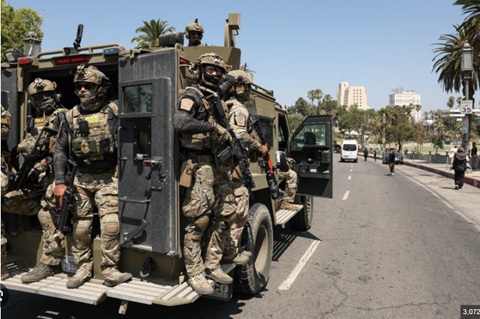
The January Altadena fire destroyed the legendary Bulgarini Gelato. The June federal military
occupation of downtown Los Angeles and subsequent ICE raids all over the city devastated our restaurants.
In the summer, we enjoyed dinners at
LA Cha Cha Cha,
Cabra, and
Little Sister
only to learn of their closing a couple weeks later.
From the generally tough economy, we were sad to lose many good places including
Bar Chelou (our favorite Pasadena Playhouse pre-theatre venue),
Akasha, Cassia, Post and Beam, My Two Cents, Mother Tongue, La Grande Orange, and Spoon and Pork.
In June, we slipped in for a final dinner at
Elf Cafe
which has been in Echo Park almost as long as we have.
2025 was also the year that a new foodie app called
Beli
started to gain traction and Tom decided to give it a try.
He had long mused about creating a "better Yelp" for keeping track of restaurant recommendations,
and perhaps Beli has beat him to it. But he says the jury is still out, and he hasn't found quite
all the features he would like. Will Beli become the ideal app before Tom retires? Time will tell.
At home, Tom continued his longstanding practice of Sunday morning shopping at the Hollywood
Farmers Market, and home-cooking Monday through Thursday. This seemed to be a particularly
bountiful year for those beautiful and delicious Jimmy Nardello red peppers (sweet, not hot),
so they were featured prominently on the Casa Lucretia table. George made his delicious peach
cobblers and
Katie's peach pie recipe
all summer,
gingerbread
and lemon cookies at Christmas, and a couple of glorious nights
this year, he made
klöße
(pronounced "kleese"), German grandmother comfort food from
Grandma Scheideman's recipe for fried dumplings smothered in mashed potatoes and onions with
a ton of butter.
2025 On Screen
In 2025 we continued in the dwindling number of people who see movies regularly on the big screen.
We began the year catching up on the 2024 Oscar contenders that were spilling into January.
Flow (best animated feature) was a
beautiful fantasy about a cat whose home is destroyed by a massive flood, and befriends several
other animals to survive.
Nickel Boys (best pic nominee) was a powerful
story of a promising young man who gets derailed by a Jim Crow era reform institution, made
even more potent with its unusual first person camera POV.
I'm Still Here
(best international feature), based on the real life struggles of
a Brazilian politician's wife who struggles to support her family and find the truth when her
husband is "disappeared" by the military dictatorship in Brazil, was ominous to watch with
its unavoidable comparisons to the present.
Spring turned to lighter fare, with
The Penguin Lessons,
as an embittered English widower (Steve Coogan) takes a teaching assignment in Argentina and adopts an
unlikely pet with heartwarming results.
In A Nice Indian Boy,
we happily watched as a cute Indian doctor tells his traditional Indian parents he's finally found
someone he wants to marry, and then brings home Jonathan Groff.
As Memorial weekend lined up blockbuster franchise films like the new Mission Impossible or
Final Destinations, our speed was more to see
Jane Austen Wrecked My Life, the first of a
new trend of "anti-rom-coms", in which a romantically and artistically frustrated writer working in a Paris bookstore
wins a writer's retreat to the estate of Jane Austen.
We also enjoyed the latest Wes Anderson film
The Phoenician Scheme,
which will satisfy Wes Anderson fans but leave most others scratching their heads.
Summer movies kicked off with high-gear anti-rom-com
The Materialists with Dakota Johnson
as an ultra-high-end dating service success star, the film skewers modern American dating
expectations as she attempts to navigate them personally and professionally.
We enjoyed a 20th anniversary screening of the sultry Wong Kar Wai classic
In The Mood For Love.
We laughed non-stop as Liam Neeson hilariously picked up the mantle of Leslie Nielsen in
The Naked Gun, a Raymond Chandleresque detective story in the vein of
Airplane!
We continued laughing with the most anti-rom-com so far,
Splitsville, in which a nice guy blindsided
by his wife's divorce request seeks support from his two best friends and ends up testing their marriage.
Just when we thought anti-rom-com couldn't get more anti, along comes
The Roses, in which a seemingly perfect couple
(Benedict Cumberbatch and Olivia Coleman) explodes spectacularly.
Fall films took a very different tonal turn, starting with
Twinless, a surprising and provocative story
about an unlikely friendship that begins in a support group for those who have lost their twin siblings.
In Downton Abbey: The Grand Finale, Julian Fellowes
puts a delicate but finally final bow on the beloved franchise which will delight its fans.
The History of Sound tells a brief intense
relationship between two young music professors (Josh O'Connor and Paul Mescal) during World War I,
and is an elegy to traditional American folk music.
The closest to an October horror film that we got was
Adulthood,
a horrifyingly dark comedy(?) in which a brother
(Josh Gad) and his sister make a series of increasingly bad choices when they discover a decades-old
dead body in their mother's basement.
Plainclothes intensely expressed the pressure
of the closet as a young police officer from a traditional Irish-American family is assigned to go
undercover in public restrooms to entrap gay men and finds himself romantically entrapped with one
of his targets.
One Battle After Another is Paul Thomas Anderson's
take on a Thomas Pynchon novel, about a revolutionary on the run in a fictional dystopian America
that feels somehow both of the 1970s but also contemporary, and uncomfortably close to the real present.
Good Fortune is both funny and endearing
as a guardian-angel-in-training (Keanu Reeves) tries to give an "It's a Wonderful Life" lesson
to a near-broke gig worker (Aziz Ansari) by having him swap places with a billionaire tech bro
(Seth Rogan) that doesn't work out as planned.
Our flights to New York provided opportunity to catch a few films that we'd missed earlier in the year.
Freakier Friday was by the numbers but still funny
and fun if you just go with it (Jamie Lee Curtis and Lindsay Lohan obviously had fun making it and the
fun is contagious).
Sorry Baby was a thoughtful portrait of a woman living with the scars of a bad
experience and how she learns to move on.
Widow Cliquot was an illuminating biopic of the
young widow in Napoleonic France who transformed the business of champagne.
On Swift Horses was an atmospheric window into
1950s lesbian and gay discovery featuring a Kerouac-like Jacob Elordi playing a card-sharp drifter and
Daisy Edgar-Jones as his sister-in-law, who are drawn to one another but also in even more forbidden
directions.
In November, the high-stakes end-of-year movie season began with
Bugonia, an unpredictably intense psychological
drama where a biotech CEO (Emma Stone) is kidnapped by a conspiracy-obsessed Amazon drone (Jesse Plemons)
who is convinced that she not only ruined his mother's health but that she is an alien intent on the
destruction of the earth.
Cynthia Erivo and Ariana Grande came back for the second installment of the blockbuster musical in
Wicked: For Good, which leaned in to the tone of its strongest number to make the story
even better than the dark and awkward arc of the stage version.
Hamnet offered a moving and powerful speculation
on how the loss of their young son to the plague may have affected Agnes (aka Anne) Hathaway and
her husband one William Shakespeare.
In Rental Family, an American actor living in
Tokyo and needing work (Brendan Fraser) stumbles into the uniquely Japanese business of being a
family member or friend for hire, and has a touching impact on a few lives.
We loved Wake Up Dead Man,
the third in the Knives Out series with Daniel Craig as a southern version of Hercule Poirot,
with great performances from Josh O'Connor as a young priest trying to bring some light to an
upstate New York parish firmly ruled by an old fire-and-brimstone priest (Josh Brolin) and the
flinty church secretary (Glenn Close).
Song Sung Blue
was a winning film full of heart and some unexpected twists in this story about two struggling
musicians (Kate Hudson and Hugh Jackman) who hit their stride with a Neil Diamond tribute band.
Eternity
was a sweet way to close out the year with a charming funny story about a woman who finds herself
in the afterlife faced with the unexpected and impossible choice between whether to spend eternity
with her husband of 65 years or with her dashing first husband who died as a young soldier at war.
The small screen loomed pretty small for us this year.
Our only subscription is Netflix, and honestly we don't watch even that all that much.
What we do watch is mostly old school network TV. Weeknight evenings it's always ABC News, Jeopardy,
and Entertainment Tonight. On Thursday nights, we've got hooked on the CBS line-up of
Georgie & Mandy's First Marriage
(the follow-on to Young Sheldon), then
Ghosts
(American adaption of a British comedy, where an innkeeper's wife can see the whole colorful
cast of characters who have died on the property over centuries),
Matlock
(well-written law firm drama with Kathy Bates as a crafty grandmother turned paralegal), and sometimes
Elsbeth
(a somewhat goofy police detective procedural with a quirky female Columbo on the job).
Beyond that, George (but not Tom) enjoys some long-running reality TV fare,
like the
Real Housewives of Beverly Hills,
Below Deck,
Big Brother, and
Survivor.
And we both enjoy a bit of HGTV.
2025 On Stage
The stage highlight for this year was our return to Broadway for the first time in four years.
While in New York, we got to see two fantastic shows.
Oh, Mary!
is a hilariously irreverent play starting from the idea of Mary Todd Lincoln as a brassy alcoholic frustrated
cabaret performer being held back by her deeply closeted husband as he's presiding over the Civil War.
No punches are held nor icons spared as comedy ensues at a level reminiscent of Carol Burnett at her best
(with a much fouler mouth).
Maybe Happy Ending, this year's Best Musical,
is a fantastic, funny, touching, thoughtful and thought-provoking play. The story is set in the near
future in Korea in a retirement home for two personal assistant androids, providing a very creative way
to explore questions about artificial intelligence becoming life-like, as well as very human questions
about aging, mortality, and finding purpose in life.
Back home in LA, we continued our full subscription at the Center Theatre Group. Our season started with
Once Upon a Mattress,
showcasing the comedic talents of Sutton Foster as Princess Winifred and Michael Urie as Prince Dauntless
in this laugh-out-loud musical version of the classic Princess and the Pea fairy tale.
Stephen Sondheim's Old Friends
delighted us next. A wonderful tribute to many of Sondheim's greatest numbers (so hard to choose!),
with a talented Broadway cast lead by Bernadette Peters (could you even do a Sondheim tribute without her?)
and Lea Salonga.
At the Taper,
Fake It Until You Make It
used comedy to poke fun behind questions about who counts as a "real" native American.
Life of Pi
used puppetry and stagecraft to great effect in envisioning this fantastical story for the Ahmanson stage.
The Taper gave an audacious update to Shakespeare's
Hamlet, not only
resetting it to Hollywood studio politics in 1930s Hollywood, but giving it an unexpected
Raymond Chandleresque epilog.
The Ahmanson ended its season with Jason Robert Brown and Harold Prince's
Parade,
a powerful and ominous musical about anti-Semitism in the Jim Crow South.
In the fall, the new Ahmanson season kicked off with
& Juliet
and we loved it. They rocked the singing, they rocked the dancing, and what a fun story. The conceit is that
Will Shakespeare is just about to debut Romeo & Juliet when his wife Anne turns up with a few notes on
the Bard's latest (manu)script. Sure it was grand gesture that Romeo killed himself, but why should Juliet
kill herself too when she's got her whole life ahead of her? Anne grabs the quill and starts to write a whole
new act for a liberated post-Romeo Juliet who's starting to make her own choices in life. Will occasionally
grabs the quill back to write in some plot complications for the story Anne wants to tell. Will and Anne's
own strained relationship motivates their takes on the story. The new story they spin out is fun, funny, witty,
and rocking. You already know all of the songs, because this is a jukebox musical worked around the vast song
catalog of Max Martin, who's written hits for NSync, Backstreet Boys, Katie Perry, Celine Dion, Britney Spears,
and more. Despite being worked around existing songs, the story is really clever (with plenty of Shakespeare
Easter eggs which Tom loved), and some of the songs get a whole new spin. For example, Britney Spears'
"I'm Not A Girl, Not Yet a Woman" is powerfully transformed when sung by a trans character, as is
"I Kissed a Boy". The singing and dancing was top notch.
The new Taper season kicked off with
Jaja's African Hair Braiding,
a powerful and very contemporary story of immigrant dreams in today's America, all told within the confines
of a Harlem beauty salon.
Back at The Ahmanson in December, we were absolutely terrified by
Paranormal Activity,
with some stellar stagecraft creating some paranormal activity right before our eyes.
We also got to the Pantages to see
Some Like It Hot.
This rollicking musical follows the famous 1959 Jack Lemon / Tony Curtis / Marilyn Monroe film pretty closely,
with one small adaptation that really makes it speak more to our times. In case you haven't seen the classic film,
the set up is a couple of jazz musicians and tap dancers are scraping by during Depression/Prohibition era Chicago
when they inadvertently witness a mob boss commit murder, and escape with the mob and the feds in hot pursuit. They
escape by dressing up as women, and join an all-women jazz act headed to San Diego. One of them starts falling for
the lead singer, while the other one captures the heart of a happy-go-lucky millionaire who owns the Del Coronado
Hotel. Comedy ensues, and in this Broadway version, enhanced with some really great classic singing and dancing.
Can they keep from blowing their cover long enough to escape the mob? It was really fun to find out.
At the LA Opera, we enjoyed several productions last year, starting with Mozart's comedy
Cosi Fan Tutte,
made extra delightful for us by seeing our young tenor friend
Anthony Leon in one of the lead roles.
In June, we saw a stunning production of Verdi's
Rigoletto,
a horrifying story set to sublime music. The crux of the story is an over-protective father (Rigoletto)
who tries to shield his innocent daughter (Gilda) from the world. (If Rigoletto had seen more operas or
read more books, he'd have known that that never turns out well.) Rigoletto is a jester for the Duke of
Mantua, whose sour jests mostly consist in cruel mockery, winning him no friends in the Duke's court.
He is an unsympathetic tragic hero, yet as his devotion to his daughter is revealed through some beautiful
duets, and his desire to protect and avenge her drives him to his tragic undoing, this Rigoletto (the rich
and compelling baritone Quinn Kelsey) won my sympathy by the end. His daughter Gilda can seem shallow just
from the outlines of the story — must innocent young women always be completely powerless to the charms
of handsome cads? In this production, soprano Kathryn Lewek brings some beautiful strength to her Gilda,
persuading me of her agency in making the choices she makes at the end, not a guileless girl swept away by
seduction, but one driven by her faith, trying to steer her father away from vengeance and toward forgiveness.
This production was set in 1930s Fascist Italy, though with the Duke's courtiers all wearing Commedia dell'Arte
masks. Some small but very effective changes to the traditional staging made this speak very powerfully
to our time on multiple themes.
In September, the opera season opened with an unusual choice:
West Side Story.
While not a standard part of the opera canon, opera companies have long done Porgy & Bess as well as Candide,
so why not this Bernstein classic too? The leads in this production were young opera singers, soprano Gabriella
Reyes and tenor Duke Kim (who performed last year at LA Opera, ironically, as Romeo in Gounod's R&J),
who would not be mistaken for Broadway belters, but their gorgeous voices suit the familiar emotional songs well.
The rest of cast brought Broadway voices and some stellar dance moves and fight choreography. Maestro James Conlon
is adept as always with this beloved score, and the stage sets beautifully captured New York's Upper West Side.
We also supported the small stage this year, attending a couple of productions by Bethesda Repertory.
My Brother's Keeper
tells of a younger gay Latino man on a quest to learn why his older brother ended his life
and what secrets he was hiding.
Collective Rage
(staged at the LA LGBT Center) shows us five very different women — all named Betty —
randomly crossing paths and affecting one another's lives in unexpected ways.
2025 In Art
We enjoyed our Memorial Day afternoon at the Huntington Library and Gardens, where they have a great
exhibit of portraits by Don Bachardy. When Bachardy was 18, he met the writer Christopher Isherwood (then 48)
at Santa Monica Beach, and for the next 34 years, they nurtured each others' talents. Bachardy had a natural
talent for portraiture, not just lifelike renditions but paintings that capture people's essence. Isherwood
had around him an incredible circle of artists and writers, so Bachardy was able to draw or paint the likes
of David Hockney, Aldous Huxley, Truman Capote, Tennessee Williams, W.H. Auden, William S. Burroughs,
Betty Davis, Elaine de Kooning, Igor Stravinsky, and more. He was prolific, doing one or two sittings a day,
drawing himself or Isherwood if he couldn't find someone else. The show includes selections from a moving
series when he drew Isherwood every day for his last months when he was dying of cancer. For us, perhaps the
most intriguing discovery was seeing that one of our friends was a Bachardy portrait subject, there large as
life on the wall of the Huntington!
We also paid our respects to Pinkie and the Blue Boy in the Gainsborough collection, and were pleasantly
surprised to see that the Huntington was also displaying a 2021 portrait by Kehinde Wiley that intentionally
echoes Blue Boy. Wiley uses the conventions of historical grand manner portraiture to portray Black and brown
models, provoking viewers to reconsider how power and privilege is portrayed in these historic works. The Wiley
portrait is framed in a baroque frame and place centrally in the room full of 18th century portraiture,
directly opposite Blue Boy. It's quite a statement.
While waiting for his car to be serviced one day in June, Tom was delighted to fill his waiting time
exploring the California African American Museum. Several exhibits were on that day. A series of
large-scale murals by Tatyana Fazlalizadeh in a 2023 project called "Speaking to Falling Seeds"
dramatically fills the entry atrium with portraits of Black women in places around LA that were
special to them. An exhibit by contemporary multidisciplinary Ethiopian-American artist Awol Erizku
documented the life of Malcolm X (Malik el-Shabazz) in ephemera, photos, and original works.
An exhibit called "Ode to 'dena", put together just four months after the devastating Altadena fire,
celebrated the works of the significant Black community of artists who had made homes there.
Another exhibit showcased Nellie Mae Rowe (1900-1982), who lived her life in rural Georgia and
developed a significant body of folk art encompassing works on paper, collage, hand-sewn dolls,
and more. Her home and garden was its own art installation and became something of a roadside
attraction. Her loosely figurative but fantastical compositions, somewhat reminiscent of Chagall,
draw on themes of domesticity and African-American folklore and spirituality drawn on her own
experience as a Black woman in the American South.
In July, George and I went to see a preview of LACMA's new David Geffen Gallery. They had demolished
most of the old museum complex, and have been working on a striking new building designed by Peter Zumthor.
The building not only subsumes the old footprint but bridges over Wilshire Blvd and takes over the old parking
lot across the street. Construction of the building is now essentially complete, although it won't be until
April 2026 before they can finish the surrounding construction and landscaping and install the art displays.
I came to this preview both intrigued and skeptical. I appreciate form, but I'm definitely a function before
form guy. This new gallery has some compelling aesthetics, but at what cost to function? Though occupying a
larger footprint on the ground, the new gallery will have substantially less gallery space than the old
buildings. The brutalist concrete walls of the interior are an interesting look, but don't seem very practical
for hanging things. (Will they cover the concrete with wood lattice, as could be seen in one of the ground floor
spaces?) All of the windows are beautiful, but will they need to be curtained to protect the artwork inside?
(I used to have a west-facing upper story office, and I know from experience what afternoon heat and sun damage
can do.) These reservations aside, visiting the gallery gave me an appreciation of some of its positive aspects.
The architecture is striking and will raise LACMA's tourist profile as a must-see attraction (if only for its
Instagrammability). It is beautiful as a public space that people will enjoy being in, with all those windows
and light. And it puts the building more in "conversation" with its neighbors, offering great views of the BCAM,
the Peterson, the Academy Museum, the La Brea Tar Pits, and the Japanese Pavilion (previously largely walled off
from any decent vantage point), as well as Wilshire Blvd itself. The amorphous amoeba-shaped gallery defies any
conventional notion of front or back, and is intentionally all on one level, so nothing is above or below anything
else. The goal is to encourage more serendipitous discovery through organic exploration rather than any prescribed
route or encyclopedic organization. I'm more open to it, having seen it now, but I'm still reserving judgment
until I see how well it works for actually displaying the museum's art collection.
In July, we visited the Getty Center to see
Queer Lens: A History of Photography, an amazing exhibition including photographs
capturing gay, lesbian, transgender, and otherwise gender-category-defying lives. It was a fascinating
assemblage of photos across more than a century, of the famous (Josephine Baker, Keith Haring,
Oscar Wilde, Radclyffe Hall) and the ordinary, documenting glimpses of largely hidden lives in private
when people could be themselves. It was amazing to get a look at lives many generations ago,
and at lives and events just slightly before our time but close enough to have some connection to,
like early meetings of the Mattachine Society. (Some of those looked like they could have been
photos from Different Spokes bike club meetings in the 1990s, but with 1970s hair.) It was inspiring
to see the ways that people found to be their true selves, if only in private stolen moments.
A companion exhibit called
$3 Bill: Evidence of Queer Lives
compiled a huge amount of ephemera from LGBTQ organizations, art exhibits, concerts, and more.
Our trip to Sweden and Norway gave us good opportunity to explore some of their great art.
Carl Milles (1875-1955) was an early 20th century Swedish sculptor. His home, on a Stockholm island,
is a lovely memorial and sculpture garden. His sculptures are mostly lifesize or larger
bronzes of classical style human figures and mythic beings like nymphs and winged horses and ogres.
His home is preserved with much of his original things and can be toured.
When you go to Oslo, anyone who's ever visited there before will tell you that you must visit the
Vigeland sculpture installation in Frogner Park. And they're right, it is amazing. Gustav Vigeland (1869-1943)
was an early 20th century Norwegian sculptor who spent his life in the commission of the City of Oslo. An
extravagant number of his bronze and marble sculptures went into a grand installation in the spacious
Frogner Park. His sculptures are almost entirely human figures, always nude, but not at all sexual,
rather just ordinary men, women, and children, mostly playful though a few more somber arrangements.
And some of them are just big dog piles of human bodies. It's fascinating and it just makes you smile
to explore it.
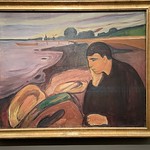
Of course in Oslo we had to go to the MUNCH (it's pronounced "moonk") museum to see the iconic painting
"The Scream" by Norway's most famous painter. Edvard Munch (1863-1944) was a great impressionist of the
late 19th and early 20th centuries, bringing his unique Norwegian emotional impressions to canvas.
(Or alas, in some cases, on paper. His famous Scream is on paper, making it very light sensitive,
so it is shown in a dim room only a few times a day for a half-hour at a time. They have three versions
of it - paint, tempera, and woodcut print - which they alternate, so there's always one version on view
at any time.) But honestly, so much of his other work is as good as The Scream, just less iconic.
His distinctive emotional style focused on people often while pensive or brooding or in the presence
of death, and even his skies are emotional. We also enjoyed more Munch, along with other Norwegian
greats like Nikolai Astrup, at the Kode museum in Bergen.
2025 In Books
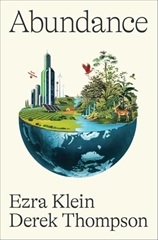
Tom hardly read books this year. The only one he did read was
Abundance
by Ezra Klein and Derek Thompson, who offer an intriguing possible future path for Democratic politics.
The offer a diagnosis of contemporary American liberal politics as a stale accumulation of
old solutions to old problems that is choking progress.
Rules and regulations designed to solve the environmental problems of the 1970s often prevent urban density
and green energy projects that would help solve the environmental problems of the 2020s. Laws meant to ensure
that government considers the consequences of its actions in matters of education and healthcare have made it
too difficult for government to act consequentially. They urge a pragmatic liberalism that they believe
could lead to an abundance of housing, of energy, and of prosperity.
(Tom speaking here:) I definitely see the appeal of this book and its message.
I was listening recently to a professor of economics and China expert who commented that one reason China
can get so much done is that China is run by engineers, while the US is run by lawyers. That has a ring of truth
and echoes this book, in that so much of America's current politics is caught up in lawyerly prevention
of things that could go wrong. The Abundance authors cite the example of Pennsylvania Governor Josh Shapiro who,
when a vital I-95 bridge collapsed, got the interstate up and running again in just 12 days. He did that by
declaring an emergency, enabling him to cut through a lot of the regulatory constraints that Klein and Thompson
see as choking our progress. That was laudatory, and a great illustration of their point (and yes, I would love
to see Josh Shapiro run for president in 2028). I have some qualms about letting go of the principles though.
We can all think of someone else who likes to declare emergencies to toss legal constraints aside and get
stuff done, but many of us are less enamored of what he is doing. I hope to find a philosophical distinction
between what Shapiro did and what Trump is doing, or does it just come down to whom you trust?
George, on the other hand, has been reading plenty this year.
He continued his walking audiobook binge, and finished the complete works of favorite author
Anthony McDonald.
After seeing the Don Bachardy exhibit, he got on a small Christopher Isherwood jag, reading
The Berlin Stories
and then wading into
Christopher Isherwood Inside Out,
the definitive biography by Katherine Bucknell.
He read
Tramps Like Us
by Joe Westmoreland, a coming of age story in the era between gay liberation and the AIDS crisis.
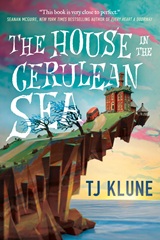
At a suggestion from a friend, he delved into some fantasy and liked
The House in the Cerulean Sea
by TJ Klune, and its sequel
Somewhere Beyond the Sea.
He also enjoyed the memoir of television writer and producer Jon Kinally
I'm Prancing As Fast As I Can,
subtitled "My Journey From a Self-Loathing Closet Case to a Successful TV Writer With Some Self-Esteem",
which was recommended by our neighbor the writer Ryan O'Connell.
Over the holidays, he has started (but not yet finished)
Write Christmas,
by our own dear friend Thommy Hutson.
2025 In Politics
This year was brutal and summarizing it will be hard, but here goes.
By far the most impactful event for America and for the world in 2025 was the return of
Donald Trump to the presidency.
On January 20, his first day in office, he issued 26 executive orders and proclamations, among them a
grant of clemency to all January 6th Capitol attack participants, including those who had been
convicted of seditious conspiracy and those who had been convicted of assaulting police officers.
(Some of those pardoned were soon rearrested for other gun charges and one for sexually
assaulting a 7-year old child.)
Other first day orders
initiated withdrawal from the Paris Climate Accord and the World Health Organization,
declared a national emergency at the southern border, ordered military troops to the border,
ended recognition of birthright citizenship,
declared a "national energy emergency" (while also terminating off-shore wind projects),
moved to expunge diversity equity and inclusion (DEI) programs from the federal government,
mandated government recognition of only two sexes based on biological markers at birth,
paused all foreign aid,
and established the Department of Government Efficiency (DOGE) to be led by Elon Musk.
In the first months of the year, DOGE dominated headlines, with its promise to find $2 trillion
in savings for the federal government and its blitzkrieg efforts to cut the federal workforce.
Its efforts were chaotic, with millions of federal employees receiving "Fork In The Road" letters
requesting resignation that blindsided supervisors, senior staff, and cabinet secretaries.
Thousands of employees hastily forced out by DOGE had to be rehired when it was discovered
that they were essential (including nuclear security experts and bird flu experts) or their
terminations were later found illegal by courts. By the end of 2025, over 317,000 people left
government service due to DOGE's efforts, a vast loss of experience and expertise. Despite
initial promises to save $2 trillion, with later official DOGE claims of savings revised down to
$160 billion, yet independent reviews find negligible savings or even net costs to taxpayers
of DOGE's efforts, and in the end the
federal government in 2025 exceeded 2024 spending.
DOGE also made much noise about rooting out fraud, but claims of massive fraud in Social Security
turned out to be completely unfounded. Among those fired were all of the various inspectors
general in the government whose job it was to audit various departments and monitor for fraud.
While Elon Musk looked almost like a co-president in the early months (although his official role
was always problematic), by May he was out and DOGE was officially deleted, but not before
dismantling USAID, the Corporation for Public Broadcasting, and much of the Department of
Education, and decimating other service bureaus like Social Security and the IRS.
The other major chaos of the spring came when Trump declared a trade war on the entire
rest of the world, including Lesotho (one of the poorest African countries) and the
Heard and Macdonald Islands (a territory mostly populated by penguins and seals), though
oddly excluding Russia. All based on dubious presidential powers to levy tariffs unilaterally
by declaring a "national trade emergency" (constitutionality still being litigated).
The tariffs, initially set to kick on a specified "Liberation Day" in April, seemed to be more
of an invitation to negotiate, though without any clear or real objectives. Trump also threatened
Canada and Mexico with high tariffs, asking Mexico to send federal troops to help defend the
border (they were already doing that) and asking Canada to stop the (virtually non-existent)
flow of fentanyl crossing the Canadian border into the US. As "Liberation Day" approached,
the Dow Jones dropped 4,000 points and the broader stock market dropped 10%, but then mostly
recovered when Trump failed to actually follow through on many of his tariff threats. After months
of mixed signals, unclear negotiations, and waffling, Wall Street coined the acronym "TACO" for
"Trump always chickens out" in relation to the tariffs. With China in particular, threatened tariffs
went as high as 145%, but then dropped to 30% in negotiations. Tariffs were often capricious.
Trump announced a 10% increase in tariffs against Canada in October because he was annoyed by
a commercial that the Province of Ontario paid to be aired during the World Series with a strongly
anti-tariff / free trade message drawn from clips and quotes of Ronald Reagan. At year end,
we've landed at an average effective US tariff rate of 16.8%, which is higher than at any time
since the 1930s.
Trump continues to insist that the cost of tariffs will be entirely borne by our trading partners
and not by US consumers, yet he was forced to drop tariffs on coffee and beef when US consumers
started to notice that that wasn't true.
Inflation remains stubbornly unchanged, still at 2.7% where it was last year,
and unemployment has crept up from 4.1% to 4.6% (at least as best we can tell, since Trump fired
the head of the Bureau of Labor Statistics over the summer, and the whole government was shut down
for 43 days in the fall).
Fighting immigration was another keystone of Trump's policy. His administration told us that
they only wanted to deport all the criminal immigrants, "the worst of the worst",
and they wouldn't prioritize deporting
the honest, hard-working, longtime residents of our communities. This thin lie was laid bare when
ICE descended on farms, on Home Depots, and at courthouses to arrest the so-called criminals
who were working in the fields and who were showing up to their court appointments to try to
follow the legal immigration process. When communities protested, the whole process was
militarized, and Trump took the controversial step of calling for the National Guard and active
duty Marines to deploy in Los Angeles, and later in Portland, Chicago, and Washington DC.
These unwelcome deployments have all been challenged by state and local authorities, and while
litigation is ongoing, they have largely been blocked. A federal judge said of
the Portland mobilization that the Trump administration had "exaggerated claims of violence"
and that their offered justifications were "simply untethered to the facts".
New egregious injustices came out daily. We learned the name of Kilmar Abrego Garcia,
who was arrested in Maryland due to an "administrative error", and sent to a notorious
prison in El Salvador despite a judge's order not to deport him. We learned the name of
Rümeysa Öztürk, a Turkish student at Tufts University who was grabbed off
the street near her home by ICE, and quickly removed to Louisiana where she was held for
six weeks before a judge ruled that her detention was unconstitutional. Her crime?
Apparently co-signing an editorial in the student newspaper. A similar "crime" was
committed by Mahmoud Khalil, a Columbia grad student and legal permanent resident, who was
illegally held in Louisiana for 3 months, during which he missed the birth of his son.
The terror inspired by these abductions, and the cruelty of the conditions in which they are held,
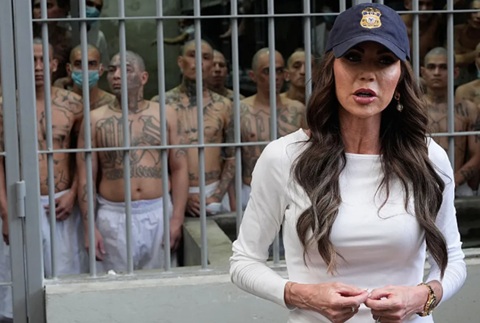
is intentional. Hundreds of Venezuelan immigrants were deported to the CECOT prison in
El Salvador, notorious for torture and poor conditions. The US has replicated that experience
in creating "Alligator Alcatraz" in Florida. Other unlucky ICE victims have been deported
to war-torn third-party countries like South Sudan. Secretary of Homeland Security Kristi Noem,
who once bragged about shooting her own puppy, has posed for photo ops at CECOT and Alligator Alcatraz.
At least 170 American citizens have been detained by ICE this year.
Refugee programs have all been canceled, so America no longer welcomes anyone fleeing
tyranny and persecution, with the singular exception of a few hundred white supremacist South Africans
who were obsequiously welcomed in October. Based on their actions, it is clear that the desire
of the Trump administration is that all non-white immigrants in the US (including legal residents
and even citizens) should "self-deport".
At the same time as Trump was fighting to stop immigration, he seems also to have declared
war on American universities and on scientific research. Trump had a number of demands for
US universities, including elimination of any DEI programs, requiring changes to faculty hiring
practices to ensure "viewpoint balance", abstaining from any social or political activism,
focusing federal research on "national priorities", disrecognition of transgender identities,
and more. Though it is not the purview of the federal government to regulate any of those
things, Trump used threats of Justice Department investigations and cutting of federal
research funding to extort acquiescence to his goals. Columbia University notably caved to the pressure,
agreeing to a settlement that included a $200 million dollar payment as well as a US Government
appointed compliance monitor, while Harvard notably defended itself in court and has so far
prevailed. In October, the administration sent a "Compact for Academic Excellence in
Higher Education" to nine universities and asked them to voluntarily sign it. So far, seven
have formally politely declined the offer (including MIT, USC, Penn, UVa, and Arizona) and
none have accepted it. Meanwhile, as Trump was threatening to cut federal research funding
from universities as extortion, his administration was also cutting research funding in general.
At the start of the administration, all research grant funding was frozen pending review by
the new administration to see what aligned with their priorities (never mind that all sorts of
research and experimentation does not have a simple "pause" button). As of November, over 2,500
NIH grants and 1,300 NSF grants had been still frozen or outright canceled, over $3 billion.
That pales with the proposed cuts for next year, with a 41% cut for NIH ($19 billion), a
57% cut for NSF, and a 24% cut for NASA. That's not good for science, but it seems to be fine
with HHS Secretary Robert Kennedy, who prefers pseudo-science anyway. Under his leadership,
credible administrators and scientists have been purged from NIH, CDC, and FDA, and he fired
the entire Advisory Committee on Immunization Practices (ACIP) so that he could stack it with
his own anti-vaccine quacks. They have already begun to alter the solidly established vaccine
schedule in ways that will cause more Americans to suffer preventable morbidity or death.
On the national security front, we learned in March that all of our national leaders were
discussing sensitive details of a secret Middle East military strike
in a group text chat on the Signal app that included Defense Secretary Hegseth's wife, his brother,
and inadvertently included a journalist too. In September, Hegseth summoned an unprecedented
in-person gathering of the entire US military flag and general officer staff and their senior advisors
only to lecture them on the "warrior ethos", to announce some new fitness and grooming standards
(beards no longer allowed), and to ask anyone who didn't support his changes to resign.
A number of senior military staff have been fired or replaced, particularly Judge Advocates
General, who would normally advise on the legality of military orders. Subsequently,
Trump and Hegseth have begun a series of military operations of questionable legality,
blowing up boats in the Carribean that were allegedly engaged in drug smuggling operations.
In one instance, a second strike was ordered to eliminate the survivors of a first strike who
were clinging to wreckage of the boat, in apparent contravention of well-established international
conventions of war. As columnist George Will observed, Pete Hegseth has managed the unique
achievement of a war crime without a war.
Upon inauguration, Trump vowed to end the weaponization of the federal government, but then
commenced asking his Attorney General Pam Bondi to investigate his political enemies,
abandoning any pretense of a depoliticized Justice Department. Bondi has been all too willing
to comply with his requests for "lawfare", but has had trouble retaining competent people
under her to carry out this miscarriage of the law. Within weeks of Trump's new term, he
was asking the Justice Dept to dismiss corruption charges against New York Mayor Eric Adams
when Adams signaled willingness to cooperate with Trump on his immigration crackdown. In a
minor "Spartacus moment",
seven US Attorneys
in the NY District office in quick succession
resigned rather than sign off on a quid-pro-quo dismissal of the corruption case.
Numerous long-serving DoJ attorneys, including staunch conservatives who had
clerked for Supreme Court Justices Scalia and Roberts, resigned rather than be complicit with
the travesty they saw coming. Trump explicitly requested prosecution of New York Attorney General
Letitia James (who was responsible for his fraud convictions), former FBI Director James Comey,
and Senator Adam Schiff. In order to beat a statute of limitations deadline for the Comey charges,
Bondi hastily appointed a poorly qualified person as US Attorney in Virginia, which lead to the
case being dismissed. The other cases rest on dubious allegations of mortgage fraud, a charge that
has recently become a lawfare favorite, owing in part to Trump's head of the Federal Housing
Finance Agency, William Pulte, being happy to abuse his office to dig up alleged mortgage discrepancies
on Trump's enemies (and giving new meaning to "trumped up charges").
No description of this extraordinary administration would be complete without noting the
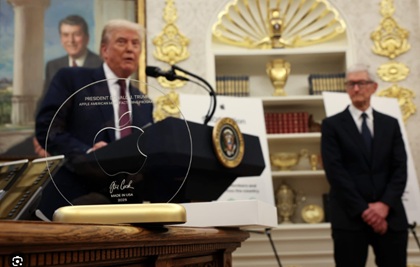
constant daily drip of degradations of decency. There's the grift large (Qatar's gift of a new
Air Force One) and small (private gala for the biggest purchasers of the Trump meme coin),
like Apple CEO giving Trump a 24K gold and glass trophy as a thank you for exempting Apple
from the tariffs. Or the soft censorship quid-pro-quo of Paramount (parent of CBS) caving to a
frivolous personal lawsuit by Trump about a 60 Minutes interview with Kamala Harris, while
Paramount was pending government approval of a merger. Or Nexstar's cancellation of the Jimmy
Kimmel show on their network as they awaited merger approval. Or the not-so-soft threats
from Trump's FCC Chair Brendan Carr to suspend the broadcast licenses of major networks
over content unfavorable to the administration. Then there's the constant trolling and
narcissism of the president (hard to distinguish the two) constantly wanting to plaster his
name and his face all over the place. The defacing of the Kennedy Center by physically
(and illegally) adding his name to the building is just the latest example. (That just adds
insult to injury after his hostile takeover of the Kennedy Center organization.)
There's the pathetic shameless thirsting for the Nobel Peace Prize.
The juvenile narcissism of Trump's replacement of Biden's official portrait with a picture
of an autopen, along with
completely unhinged captions
is just a perfect sign for this time where it becomes impossible to distinguish life from satire.
The man is his own charicature.
So far I've said nothing about Congress, as there's really not much to say.
The president has run roughshod over Congress, and Congress has meekly complied, ceding their
power to the executive. The Senate obligingly confirmed even the most blatantly unqualified
of Trump's cabinet appointments. Congress passed the so-called One Big Beautiful Bill in the
spring, and has done nothing of consequence since. They couldn't even pull themselves together
to pass a budget until after 43 days of government shutdown.
How much the courts will remain as a check on Trump's excesses remains to be seen. Virtually
all of his questionable actions — from unilateral emergency tariff power, to firing inspectors
general and heads of supposedly independent agencies, to deploying the National Guard for
domestic law enforcement, to ending birthright citizenship, and more — have been challenged
in court. Many have been initially blocked, though some have been unblocked, and none have yet
gone through the full legal process on their merits. It has been heartening to see so many
federal judges, including conservative judges and Trump appointees, willing to halt the lawlessness.
We hope that the Supreme Court will hold the line. We also hope that the people will be the
ultimate check. It was heartening that five million Americans turned out for the
first No Kings protest in June,
and seven million turned out for the second one in November. Insofar as state and local elections
are any bellwether, Democratic gubernatorial candidates in Virginia and New Jersey won what were
thought to be competitive races by unexpectedly substantial margins, and New York City elected
Zohran Mamdani as mayor, becoming the first major city to elect a Democratic Socialist as its leader.
This year also saw political civility degrade to point of an uptick in political killings.
In June a man with a gun in Minnesota went on a rampage, killing House Speaker Melissa Hortman
and her husband, and also shooting a state senator and his wife. When arrested, police found
a target list of 70 Democratic politicians and abortion rights advocates in the assassin's car.
In September, Charlie Kirk, a very prominent right-wing activist and public speaker was
shot and killed while speaking at an event at a university in Utah. In the wake of that killing,
Trump's response was characteristically unstatesmanlike and petty, using the opportunity
to blame the left for all the violence in the country, and promising to crack down on
anti-right hate speech.
Stephen Miller (White House Deputy Chief of Staff) was more explicit.
Speaking about basically anyone who observes resemblances between this administration and the Third Reich,
Miller said this on Fox News: "You will live in exile. Because the power of law enforcement under President
Trump's leadership will be used to find you, will be used to take away your money, to take away your power,
and if you've broken the law, to take away your freedom."
This dishonors Charlie Kirk by going against much that he is said
to have stood for. Kirk and the country were much better served by the
speech from Utah Governor Spencer Cox,
viewing this as an attack on the American ideals we all share, and urging us all to take the temperature down.
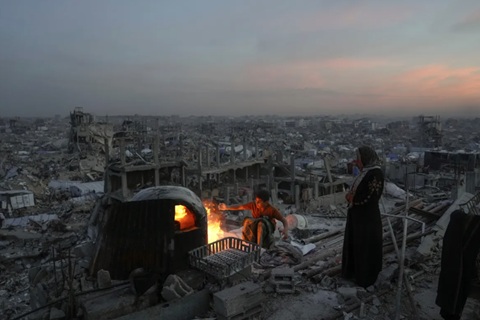
Outside the United States, there are few bright spots there either. In the Middle East,
there has been a nominal ceasefire between Israel and Hamas, during which the remaining living
hostages and all but one dead hostage have been returned (so there's a bright spot). Alas,
the situation remains hopeless and stagnant, with ongoing food and shelter insecurity, massive
dislocation and economic disruption. Over 70,000 Palestinians have been killed in the 2+ year
conflict, nearly half of which are women and children, and that figure does not account for
those who died from lack of food, shelter, or medical care. Even after the "ceasefire", the
hostilities are merely reduced, and casualties continue to mount. In June, Israel executed
a surgical strike against Iran's nuclear capability, with US participation in dropping a
"bunker buster" on an underground nuclear facility. Iran retaliated with missile and drone attacks on
Israel and US bases in Qatar, which were largely performative and mostly repelled, though there
were 28 Israeli casualties.
In Ukraine, the war ground on into its fourth year with no substantive progress toward resolution.
Russia has made some minor territorial advances in the Donbas region, but at great cost
(estimates of 400,000 Russian soldiers killed or wounded this year). Ukraine has grown more
capable with its drone attacks, striking deeper into Russia and successfully attacking
military bases, oil refineries and pipelines, and oil tankers at sea. One operation is said
to have damaged over a third of Russia's strategic bomber fleet. Trump has attempted at various
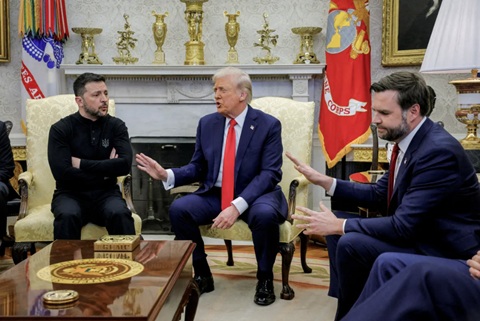
times to drive a peace deal, but with no success. His first meeting with Zelenskyy at the
White House devolved into a shouting match with Vice-President Vance accusing Ukraine of being insufficiently
grateful. In June, Trump invited Putin to meet in Alaska, which was a big diplomatic coup for
the isolated autocrat, but nothing came out of it. This fall, US diplomats have been pushing
a 28-point peace plan, but there appears to be impasse around the most contentious issues
of territory and security guarantees.
In April, Pope Francis died, and when the white smoke cleared, we now have the first American
in St Peter's chair, Pope Leo XIV. He seems like a good man, and has so far continued many
of Francis' priorities including compassion for migrants and concern for environmental stewardship.
Unlike Benedict, who often used his Christmas message to the curia to bash LGBTQ people,
Leo's first Christmas message emphasized the church's mission of bringing peace and reconciliation to the world.
Please, we need it!
2025 In Technology
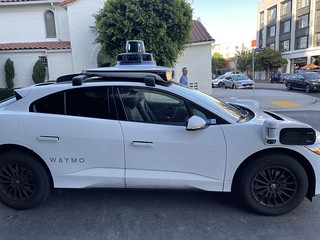
This summer, when Waymo expanded their coverage to cross Sunset and come into our hilly
neighborhood, it was time to give it a try. We'd seen the driverless cars cruising around
town for a while, but it was still pretty amazing to watch it pull in front of our house,
let us hop in (Tom excited, George trepidatious), and then watch it adeptly maneuver our
streets and make its way to the downtown Arts District where we were meeting friends for dinner.
Watching the steering wheel steer itself was something right out of Disneyland's Haunted Mansion.
We arrived to dinner unscathed, and returned home the same way. The future has arrived.
For me (Tom), this was the year when AI jumped from being a novelty to being an essential tool.
I use it every day at work, usually many times a day. Even though it still makes mistakes
("hallucinations") regularly, it is still so immensely useful. It's kind of like having an
office mate who remembers everything they've ever read, and is right about 93% of the time.
You're still going to ask them when you need to figure something out. It still amazes me
that I talk to this thing the same way as I'd talk to a person, and carry on actual conversations
with context. For technical knowledge, this is just a generational leap. The first generation
was just writing things down in books and manuals. The second generation was putting those books
and manuals online where they were ubiquitously accessible and readily searchable.
The third generation was crowd-sourced knowledge, like Wikipedia generally or Stack Overflow
for technical knowledge, where you could pose questions ("why am I getting this error and how
do I fix it?") and get answers from more knowledgeable people all over the world.
AI is now the fourth generation, where all of the manuals and all of the knowledge bases
have been absorbed by this thing that you can interrogate in English and get useful information
from.
The other technology news is that tomandgeorge.net got a much-needed overhaul this year.
(Non-techie folks can stop reading now, cause the rest of this paragraph is getting hard-core geeky.)
This website, as recently as last year, was still written largely in HTML4, with some basic CSS
but most of the formatting being done with tables and old-school non-CSS tags, basically
state of the art circa 1999. At some point, I threw in a bit of JSP code to balance the
formatting for the "year at a glance". Now finally this year, the site has been overhauled
to HTML5, with some responsive web design using flexboxes, media queries, and the like,
so that hopefully it will look better on phones and tablets as well as my desktop computer.
The other thing that got overhauled was the infrastructure.
Since tomandgeorge.net relaunched in Amazon Web Services (AWS) about ten years ago,
it has been running on essentially the same fixed EC2 instance, on Amazon's equivalent
of CentOS 6 that hasn't even been patched in ten years. I never implemented https.
Since I'm such an irresponsible sysadmin for tomandgeorge.net,
I figured maybe I should let AWS do its AWS thing in a bigger way.
So a couple months ago, I relaunched the site as an Elastic Beanstalk application,
elastic load-balanced across two availability zones, with EC2 "spot instances",
a proper PKI certificate for the domain to do https, and using S3 and CloudFront CDN for much of
the static web content. Just like that, I'm out of the sysadmin business, at least in the traditional sense.
I no longer worry about patching the OS or upgrading Tomcat; Amazon now does all that for me.
All I do is upload my war file, and AWS does the rest. It was not as simple as I had hoped
to set it up. You really have to know quite a lot about networking and AWS specifics just to
properly answer all the questions that the set-up requires, and I had a few false starts,
tore it down and started over. But fortunately, it's easy to experiment in the cloud.
Now that I've got it set up, it's quite slick and so easy to maintain.
It costs more, looks like about $37/month versus the $14/month I was paying before. The set-up
is a bit of overkill to run our tiny website on a single t3.micro instance, so I may revert,
but it was good experience to learn how to set it up.
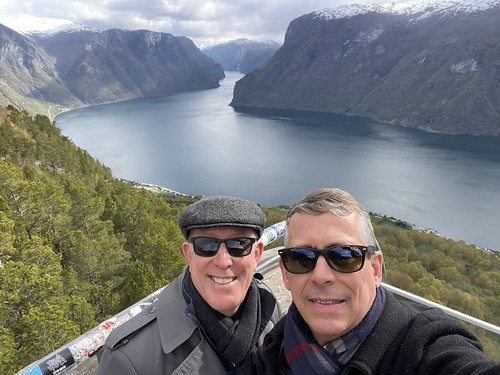

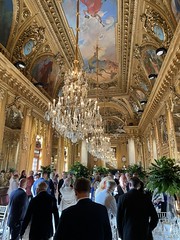
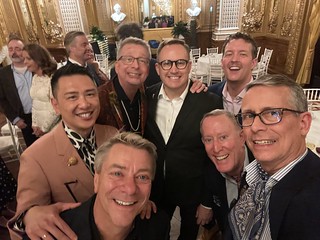
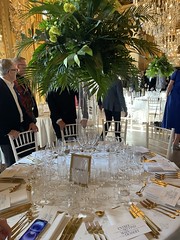
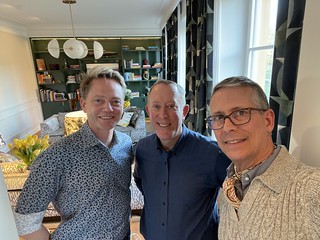
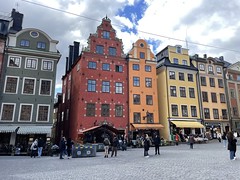
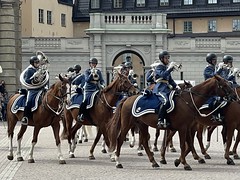

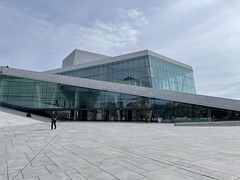
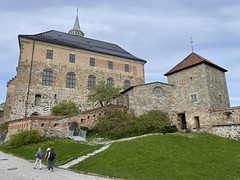
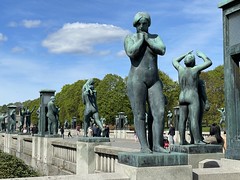
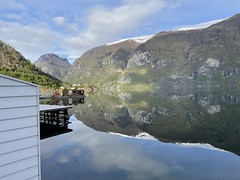
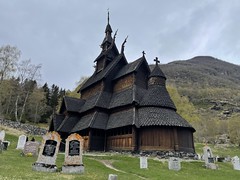
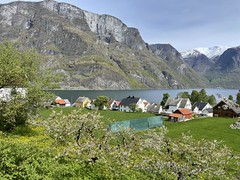
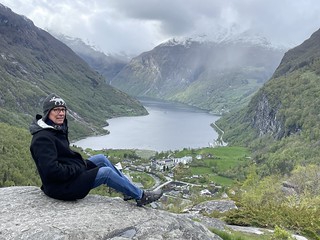
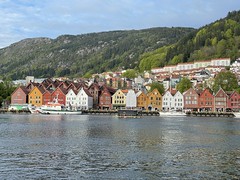
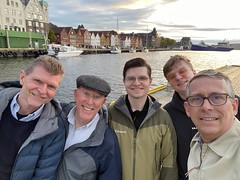
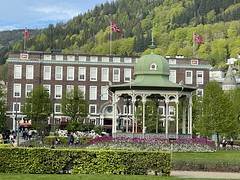
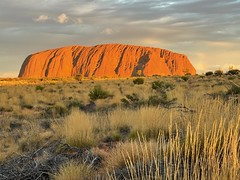

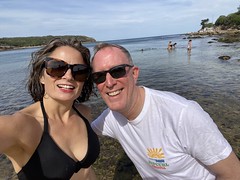
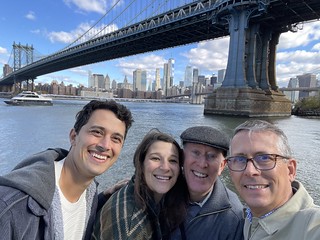
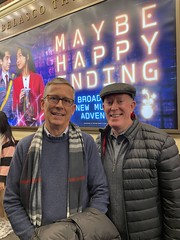
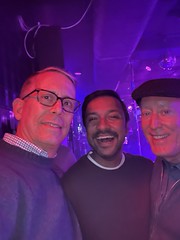
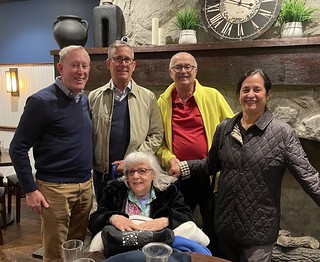
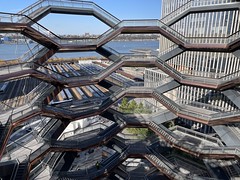
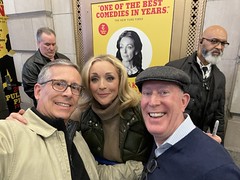
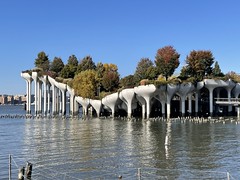


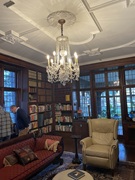
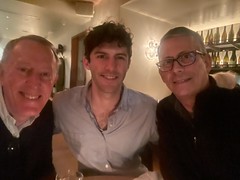
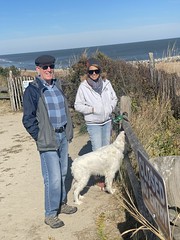
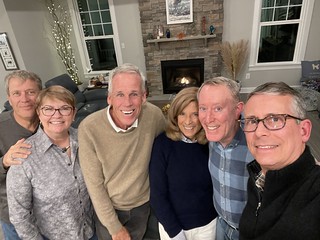
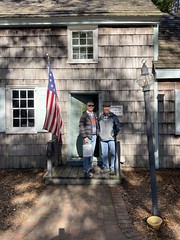
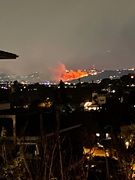






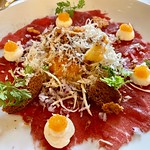

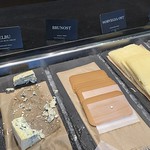

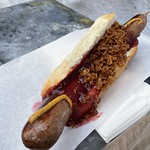

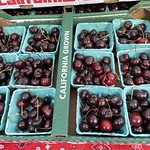
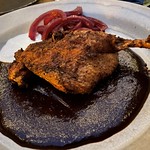



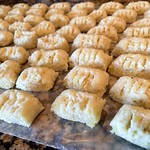
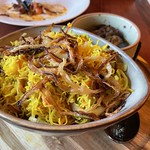


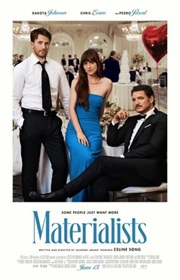
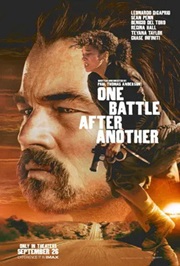
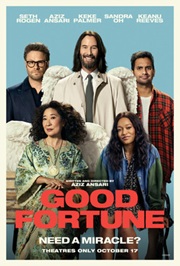
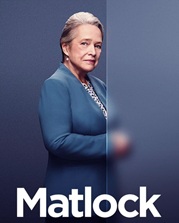
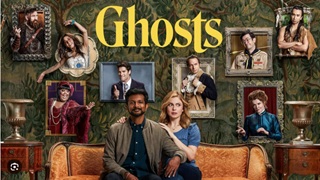
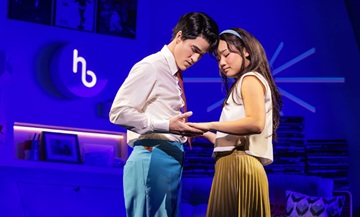



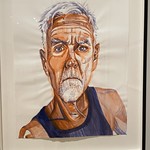
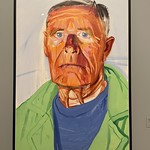
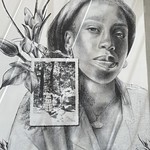
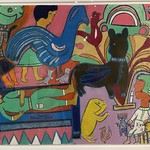
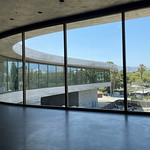
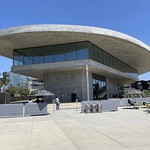
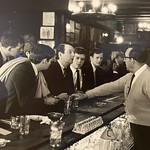
.jpg)
.jpg)